

Apple’s M-series chip gamble 5 years later: How ditching Intel revolutionized computing — and what’s next
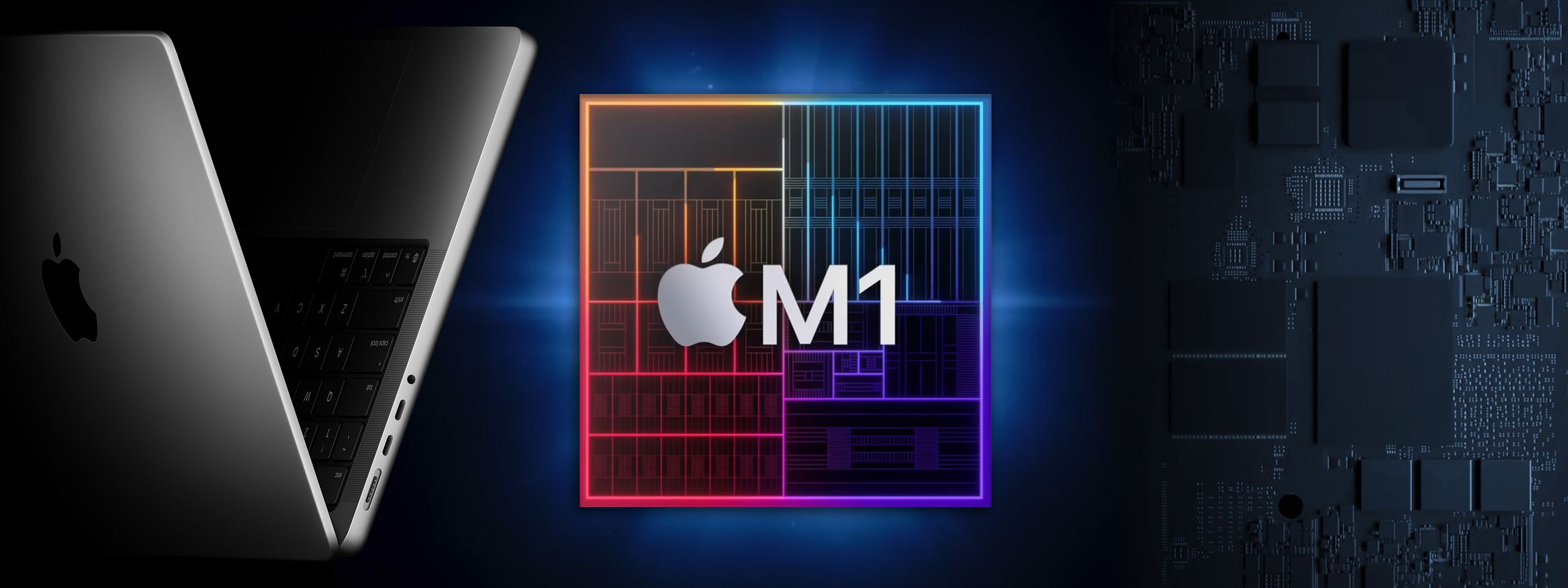
Saying that Apple’s M-series processor shook up the computing industry would be an understatement. Five years after Tim Cook announced that the company was ditching Intel for its own silicon for Macs, M-series chips from the original M1 to the current M5 continue to set new standards for performance and efficiency. It has made everyone rethink what’s possible with Arm-based architecture.
While the success of the M-series seems inevitable in hindsight, it wasn’t guaranteed. After all, Macs powered by Intel chips were successful for years, and switching from x86 architecture to ARM could have proved disastrous. However, when Apple’s internal testing showed how much faster M1 was over Intel, the company knew it had made the right decision. The fact that the five-year-old M1 MacBook Air can still hold its own against competitors is a testament to the M-series’ strengths.
Genesis of the M-chip: Moving Away from Intel
Apple switched from PowerPC to Intel in 2006. That particular relationship lasted until 2020, when Apple began phasing out Intel Macs for computers running on M-series chips. Given the length of the partnership with Intel, it wasn’t an easy decision to make.
“It was definitely not a step Apple took lightly,” said Tim Millet. “We had a very strong relationship with Intel. They were great silicon partners. I was here when we transitioned in 2006 to Intel, and that was a fantastic transition, and I think it definitely injected a lot of energy into the Mac.”
Though potentially risky, Apple already had experience developing chips for the iPhone and iPad. This gave the company the knowledge and confidence to develop its own processors for Macs.
“We were building chips for phones and building a team and building the capability, and building the relationships with the foundries,” said Milet. “We got a lot of practice building that up, and we got good at it. And as we extended our efforts into iPad, it allowed us to scale things a little bit.”
Apple’s experience with the iPad Pro allowed the company to imagine a processor that would work well for Macs. There were talks with the software teams to figure out how they could pull this off effectively. Apple didn’t just want to create an ultra-powerful chip, but also one that was energy efficient.
“This took us time,” said Millet. “It took us time to convince ourselves and to convince the executive team and the marketing teams to say: ‘Hey, we think we can do this, and we think it might be something special.’ And we were paying very close attention to what really mattered for the Mac.”
Fortunately for Apple, they had Mac experts with 30 years of experience who could tell the team everything that was important for the Mac. Tim Millet believes that was the secret weapon that helped the team build the M1 chip.
“As a silicon architect for most of my life,” said Millet, “having the ability to really engage directly with the software and system team side by side as you build the chip makes all the difference, because you don’t have to guess. You know exactly what you’re building. You know exactly how it’s going to get used. You double down on the things that matter the most.”
The “a-ha” moment
With the idea of what would become the M1 chip in place, Apple soon developed a prototype. The team had an idea of what to expect, but even they were amazed by the initial results.
“It was like being introduced to the Mac again for the first time,” said Tom Boger. “Opening up the system and seeing [that] your battery life indicator didn’t budge, and wondering if the software was working correctly. I’ll never forget walking around with that first system. I could not wait for the world to experience the Mac again.”
“We started exploring prototypes pretty early,” said Tim Millet, “and the battery life was certainly one of those moments. And because we were building up this engine from the phone, all the blocks that we were putting in, there were extensions of this super energy-efficient focus that we [implemented].”

In hindsight, it seems obvious to take the building blocks of the iPhone’s battery and put them in a Mac. Apple knew the battery life would be fantastic, given the size of a MacBook’s battery. As Milet said: “It’s like you got this ocean of energy using this thing that was meant to operate in this very tiny pond of energy.”
The other revelation was the performance the team was seeing from the M1’s CPU, especially since Apple felt performance-per-watt had stalled on Intel. They were able to get more from the M1 at a “dramatically” lower frequency.
“It was really the energy efficiency focus that helped make a huge difference, not just in the battery life,” said Millet. “Being able to deliver amazing compute within the thermal constraints of the devices that we wanted to build (and were already building) into that beloved, classic MacBook Air enclosure that we shipped it with… I think it completed the story for the MacBook Air. This is what the MacBook Air dream was when Steve pulled it out of the envelope.”

With the MacBook Air and iPhone both using Apple-developed silicon, it was easier for the software teams to focus on a unified platform. It allowed the teams to enable many of the applications that folks were already using on their iPhones. This helped everything feel familiar to iPhone users who were also Mac users. “That really is part of the magic,” according to Millet.
Another “a-ha” moment for Tom Boger was opening the MacBook Air M1 for the first time and seeing it instantly wake up. The overall snappiness of using the laptop was also memorable. “It just gave me an experience on my Mac that I hadn’t had before.”
Unified architecture
The M-series’ unified architecture is its defining feature. Integrating the CPU, GPU, Neural Engine and memory into one die allows for the astonishing performance and power efficiency that Mac users have come to enjoy over the past five years. Thanks to this architecture, developers aren’t as constrained as they would be on traditional hardware with separate CPU, GPU, and RAM.
“On iPhone and iPad,” said Millet, “[the] memory system has enough bandwidth to feed the GPU. But we needed the capacity for the CPU as well. So when we introduced [the M1] on the Mac, it allowed internal developers to say ‘Oh my gosh, I can now operate in the GPU, move these buffers back and forth between the CPU and the GPU.’” These developers are also able to move those buffers back and forth between the video accelerators and media accelerators.

This is a fundamental architectural shift that enables developers to really operate without restrictions. For example, you don’t have to worry about generating images in one place and then running them through a PCI Express to get to the other memory system. There’s one big pool of memory.
Tim Millet said that bringing this unified architecture to the Mac introduced it into mainstream computing in a way that had never been done before. While the M1 wasn’t the first to operate this way, having this architecture in such a popular laptop gave it more impact.
“I would say [the unified architecture] continues to pay dividends even today, especially when you’re speaking about AI,” said Tom Boger. “With large language models running on a device, we can tap into that whole pool of memory, and you can take a MacBook Air and run LLMs with tens of billions of parameters all the way up to an ultra chip there, where you can have hundreds of billions of parameters in an LLM on device, and that’s all because of the magic of having a unified memory architecture.”
The Neural Engine
Large Language Models (LLMs) like ChatGPT have dominated headlines for the past two years. This has given rise to “AI laptops,” which utilize an NPU (Neural Processing Unit) to perform AI-driven tasks.
While computers with an NPU might sound novel, Apple’s M-series chip has had a Neural Engine since the beginning. Though Apple initially didn’t discuss the Neural Engine as much as it did general performance and efficiency, the company is now stating that the M5 processor is the most powerful AI chip ever. Clearly, AI is an important feature of the M-chip.
“We introduced our Neural Engine in the iPhone back in 2017, but it was really about computational photography,” said Tim Millet. “You didn’t have all these chatbots and LLMs and things.”

For the M1 chip, Tim’s team said they needed to re-architect the Neural Engine for the processor. He wasn’t sure why it would matter yet, but he told the team to go forward. Because of that decision, M1 (and the M-series in general) was ready for the AI wave we’re currently experiencing. While the Neural Engine exists to aid with AI-driven tasks, Apple isn’t limiting said tasks just to the engine.
“The neural engine is there when we absolutely need the most energy-efficient solution, but we have this great GPU as well, and we can run [it] at the same time,” said Millet. “It’s a super convenient way for [developers] to invest in extending neural compute in the applications that are media-driven.”
The M-series chip ‘unleashed Apple’
Apple’s shift from Intel to M-series chips on the Mac didn’t just have an impact on the computing industry. You could argue that it was also transformational for the company itself.
“It’s really unleashed Apple,” said Avi Greengart, consumer technology analyst and founder of Techsponential, “It’s given them the control they’ve always wanted, along with the flexibility to allocate resources to specific parts of the chip. Some years they’ve focused on CPU, and other years on GPU. The architecture itself provides advantages with memory being part of the package, allowing it to be shared across both CPU and GPU rather than having the GPU rely on separate memory.”
This flexibility has given Apple a dual advantage: technical performance and strategic independence. No longer beholden to Intel’s slower roadmap, Apple differentiated itself in a way it hadn’t since the Motorola era. The narrative shifted from “we have better computers because our software is better to ‘we have better computers because our software is better and our hardware is better too,” said Greengart.
![Quote from Avi Greengart, Consumer Tech Analyst for Techsponential: “Apple’s move to its own silicon has turned the industry on its head, opening the market for Qualcomm Snapdragon... And [pushing] AMD and Intel"](https://cdn.mos.cms.futurecdn.net/nZWWborwrSgGLZ9XPXooWR-2560-80.jpg.webp)
Apple’s focus on performance per watt has been equally transformative. Whereas the industry used to focus on raw power, Apple decided to emphasize efficiency. Thanks to that, MacBooks can now deliver impressive performance without being tethered to a power supply. “Being able to achieve a reasonable fraction of high-end GPU performance while not recharging your laptop for 15 hours is incredibly impressive — and it wasn’t a user experience we had until the M series,” says Greengart.
This shift has forced competitors like AMD, Intel, and Qualcomm to rethink their own efficiency strategies. “Apple’s move to its own silicon has turned the industry on its head, opening the market for Qualcomm Snapdragon to be more broadly adopted by PC OEMs who need something competitive. It’s also pushed AMD and Intel to ramp up the performance per watt of their products.”
One of the things that few expected was that, thanks to Apple’s economies of scale and vertical integration, the company also gained cost controls that others don’t. Apple has long been associated with premium pricing, but the M-series has changed that perception (at least to some extent).
“We’re seeing super high-end computers being sold for under $1,000 from Apple — something not everyone predicted,” says Greengart. “People often think of Apple as a premium brand because it primarily plays at the high end of the market. But the M series, especially when you use [older chips like] the M1, allows Apple to put powerful processors into laptops sold to high school students. At the same time, you can get an iMac with the latest chip — I had an M4 iMac the day they announced the M4, and that was complete overkill.”
The analyst told us that even if you’re just planning to use an M-series MacBook for Facebook and email, you’re guaranteed it will remain powerful and fast for a very long time.
M-series impact on Mac users
Apple’s transition to its own silicon has reshaped the computing landscape in ways few anticipated. It has also made users’ lives easier. Two such users are Tyler Stalman, known for his popular YouTube channel, and David Stout, Co-founder and CEO of WebAI. Each shared their thoughts and experiences using Macs with M-series chips.
“There’s obviously an enormous jump at the M1 era,” said Tyler Stalman. “Just before that, you’d have to be careful about which codecs you’re working with on your laptop versus on a desktop. Different machines could handle different levels of 4K and compression. And now we’re at a point where, as long as I’ve got my MacBook Pro with me, I can throw anything at it, and it just works. Nothing ever slows down until you start having layers of effects or [you throw] AI at it. But all of the basic editing now works on every single Mac that I work with.”

Regarding how M-series MacBooks changed or improved his workflow in comparison to other laptops, Tyler says one of the biggest differences is that he no longer has to choose between a desktop or a laptop to get the performance he needs. Before, he would do lighter work on a laptop when on the road, and save the heavy lifting for his desktop. With a 16-inch MacBook Pro, not only does he get all the processing power he needs, but a large display that’s suited for video editors.
“Some of the biggest quality of life improvements for video editing came with the additions of more onboard encoder and decoder cores on the M chips,” said Tyler. “As [Apple] has updated the M-series, they’ve added more dedicated encoding and decoding chips that just handle video. They offload everything from the CPU and GPU to this one chip that’s handling everything, and that’s really sped things up.”
David Stout’s WebAI created an AI library called webFrame that is designed to work directly with Apple silicon. Because of that, his company can leverage the unified memory on the chip. “[There] is less copying from memory because it’s shared, so when you cut that out, you have much faster inference time, as well as leveraging the architecture’s processing capabilities of these models. The effectiveness in performance you get with Apple silicon is one of the ways we’ve been optimizing.”
Iterative generations
The leap from Intel to the M1 was monumental. However, there has been a perception that subsequent generations have just been iterative at best. As we get to 2nm chips, some believe Apple and other manufacturers might hit a wall. However, Apple believes there is still more that the M-series can do.
“I would point out that the success of generations has been relentless every year, right?” said Tom Boger. “We didn’t just bring out M1 and rest on our laurels. We’ve kept our foot on the gas. And so every year we move the ball forward when it comes to Apple silicon and the M series of chips.”

Boger also said that there has been six times the AI compute for the GPU between M5 and M1. In addition, there is also the scope of the M-series product line, which includes the M5 chip in the latest iPad Pro and 14-inch MacBook Pro. “We’ve scaled Apple silicon even further,” said Boger. “If you look at where we were with them, we’ve continued to push every year.”
This is a sentiment Tim Millet shares, saying that his team isn’t dwelling on the past. “We have our foot on the accelerator, and we’re going to stay on the leading edge of the process nodes. There’s nothing relaxed about our posture for what we want to do for our chips to enable these amazing products, including the Mac. We’re happy about what we’ve done.”
The future of MacBook design
In 2021, Apple revealed a new utilitarian and slimmer design for the MacBook Pro. The MacBook Air would eventually adopt this design in 2022. Nearly three years later, MacBooks have retained this same basic look. Naturally, this has raised the question of when Apple might redesign its MacBooks, and if the M-series chips influence design choices.

“We sit side by side with our design and software teams to imagine possibilities,” said Millet. “When we solidify on something like a new display or new capability, all of that is done with silicon enablement. We try to figure out how to enable the experience we want to deliver without burning the battery quickly.” Tom Boger put it succinctly: “[Tim] is designing his chips to skate where the puck’s going to be.”
The future of the M-series chip
Looking forward, there are several things Apple can do because it controls its silicon design, according to Avi Greengart. One depends on its AI strategy and partnerships. If Apple moves forward with better models and enables more on-device processing, it could enhance its privacy and data security while giving users capabilities they’d otherwise need the cloud for.

“The fact that Apple can choose how large the NPU is while simultaneously building the software to take advantage of it gives them a different kind of advantage compared to Intel or Qualcomm,” says Greengart. “Qualcomm’s NPUs are huge, as are MediaTek’s, but if Microsoft or ISVs don’t leverage that power, some of it is wasted. Apple, by contrast, only includes what it knows it will use.”
Greengart also says that another area to watch is cellular integration. Apple already has a modem, and he expects the company will eventually integrate it onto the die. “The capability of making every Mac a cellular Mac is very interesting. Apple would only pursue that if it had the right connectivity relationships, similar to what it has with the iPhone and iPad. These are the kinds of capabilities that come from designing your own silicon, even if Apple doesn’t manufacture it themselves.”
Outlook
Apple’s M-series processors have done more than boost the performance and power efficiency of Macs. The company’s chips have redefined what you can expect from a computer. By combining efficiency with raw computing power, Apple’s silicon allows for laptops with astonishing battery life and that are as mighty as a traditional desktop.
Five years later, we’re still feeling the effects of Apple’s disruptive processor. Competitors like Intel, AMD, and Qualcomm are now scrambling to match Apple’s focus on performance-per-watt. Average users have also benefited from features like unified memory that help them get work done faster and more efficiently.
Moving forward, we could see even deeper AI integration, new designs, and perhaps even cellular-enabled Macs. It’s also possible Apple will surprise us all with something we hadn’t considered. Regardless, the M-series chip gave the industry a major shake-up, and it will be interesting to see what Apple has in store for the next five years and beyond.
Source link
